EXPLAINING THE STRUGGLE FOR HUMAN RIGHTS IN RUSSIA |
|
|
Hello and welcome back to the Digest. |
Today we are covering two stories — one about a dissident trying to get jailed, and one about the silencing of election monitoring initiatives. |
In solidarity, Dan Storyev |
|
|
Dates: August 15 – September 4, 2025
Venue: De Balie, Amsterdam
The exhibition is curated and produced by All Rights Reversed, supported by The Moscow Times & De Balie Art Center. |
This is an exhibition of independent antiwar and dissident artists. VIRUS is a reflection on how Kremlin-style authoritarian practices are infecting other countries. Artists from Russia, Belarus, Ukraine and the global diaspora explore these urgent questions through their work. |
Participating artists include former political prisoners like
Nadya Tolokonnikova (Pussy Riot), Sasha Skochilenko, and many more. |
|
|
Donate to OVD-Info to keep us running |
|
|
Trigger warning:
This is a newsletter about Russian repressions. Sometimes it will be hard to read. |
|
|
The unbearable absurdity of Russian jails |
|
|
Let’s start with a brief note I wanted to write just to show you the absurdity of the Russian penal system. A man is now appealing to the court that sentenced him... because the prison won’t let him in. Let me explain. |
In Russia, aside from typical prisons, there are also penal settler colonies. And no, these aren’t in Australia — they are internal, dotting the vast country. Living there is like living in exile, but is probably preferable to being in a full-on prison. |
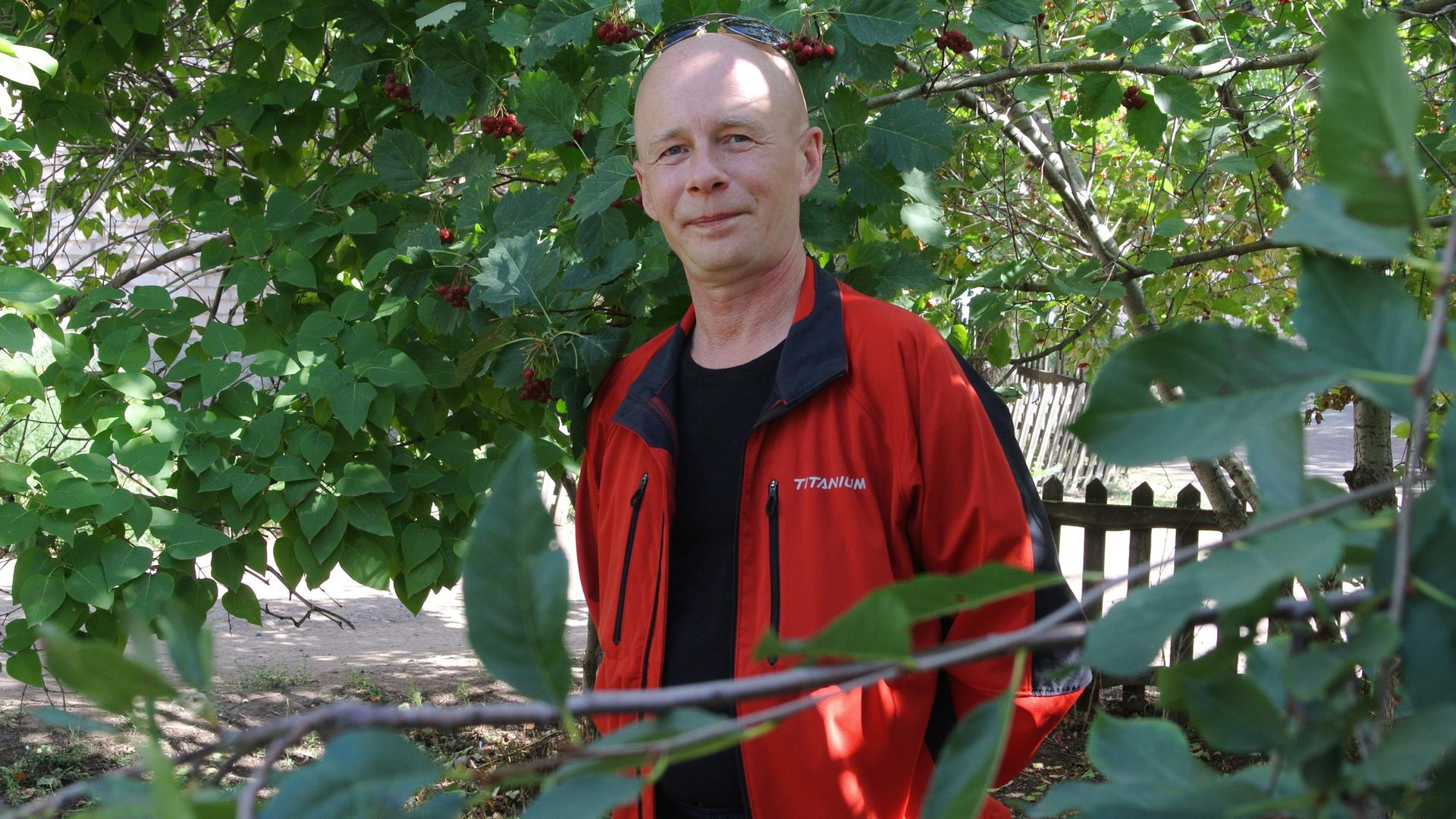
Sergei Salazkin is a lawyer who was sentenced to a year and a half in one of these penal colonies for posting about Russian strikes on civilian areas in Ukraine. On 25 July Sergei arrived for inspection by the prison service, after which he was supposed to be sent to the penal colony. The administration refused to send him, demanding court documents. The next day Sergei came back with papers from the regional court and was again turned away, with authorities now saying that they wouldn’t even consider the papers without a request from the district court — the next lower court in the hierarchy.
|
|
|
Sergei Salazkin / Photo: Sergei Salazkin’s social media |
|
|
The assistant to the deputy chair of the regional court noted that until the case, which was just sent to the court, reaches the court there is no way the court can place Sergei. When asked whether she found the situation absurd, the assistant replied: “the question does not merit an answer”. |
Sergei says: “now the only thing I can do is picket the Federal Prison with a poster asking to ‘take me to jail’”. |
|
|
Check out this piece from our partners at Meduza, based on our Russian-language reporting. |
|
|
You might know that Russia has a robust, complex electoral system on multiple levels of government. This system exists, at this point, as a Potemkin village solely to support the illusion of a democratic nation. Why Putin would keep this illusion up when everyone in and outside Russia knows that this is a sham is a subject of academic debate — perhaps the Kremlin uses elections as public opinion polls, perhaps they see it as strengthening legitimacy, or maybe the elections are a relic of a democratic past.
|
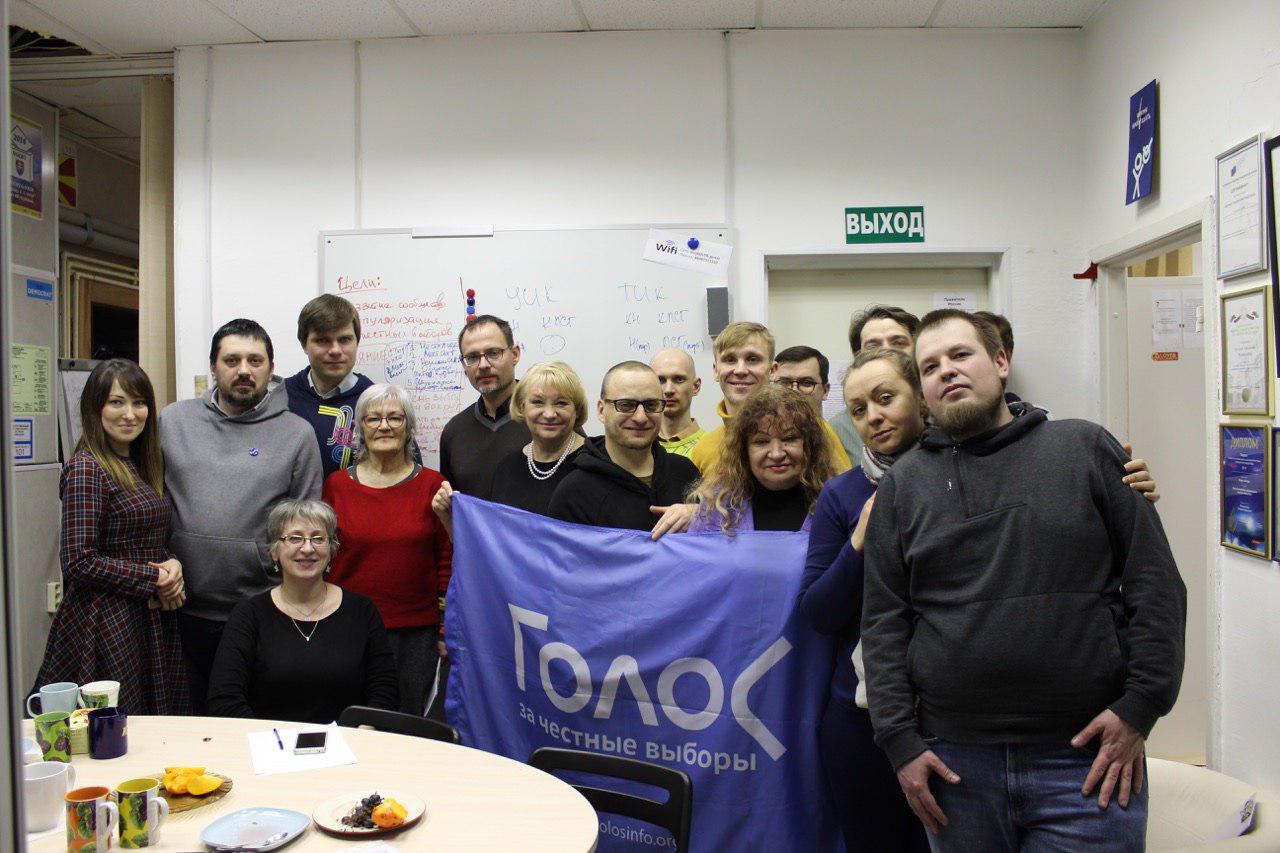
Speaking of the democratic past, there was once a time when Russia was dotted with groups which tried to support the fledging democracy. One such organization was Golos (lit. Voice). I wrote about them in Digest #23, when Golos members were intimidated and raided en masse. |
|
|
Golos’ coordinators from various regions of Russia during preparations for monitoring of the Russian presidential election, 23 February 2018 / Photo: ‘Голос — за честные выборы’ Facebook page |
| |
They were one of the few organizations who called out the Kremlin’s electoral violations for over a decade. They put up an online map of electoral violations, enabled thousands of volunteers to become election monitors, and over the years showed the slow burn of the destruction of the legitimacy of Russian elections. |
This didn’t go unnoticed by the Kremlin. Golos’ activists were threatened, stalked and harassed. That was still a time when the Kremlin tried to justify repression in the public sphere, and they teed up a major TV channel — NTV — to go after Golos. One activist had NTV staff stalking and harassing him and his family for years. In 2016 the Kremlin liquidated Golos, but the organisation continued as an informal movement. They were also proclaimed “foreign agents”. In 2023, one of Golos’ key founders, Grigory Melkonyants, was arrested. Over a dozen Golos members had their homes raided.
|
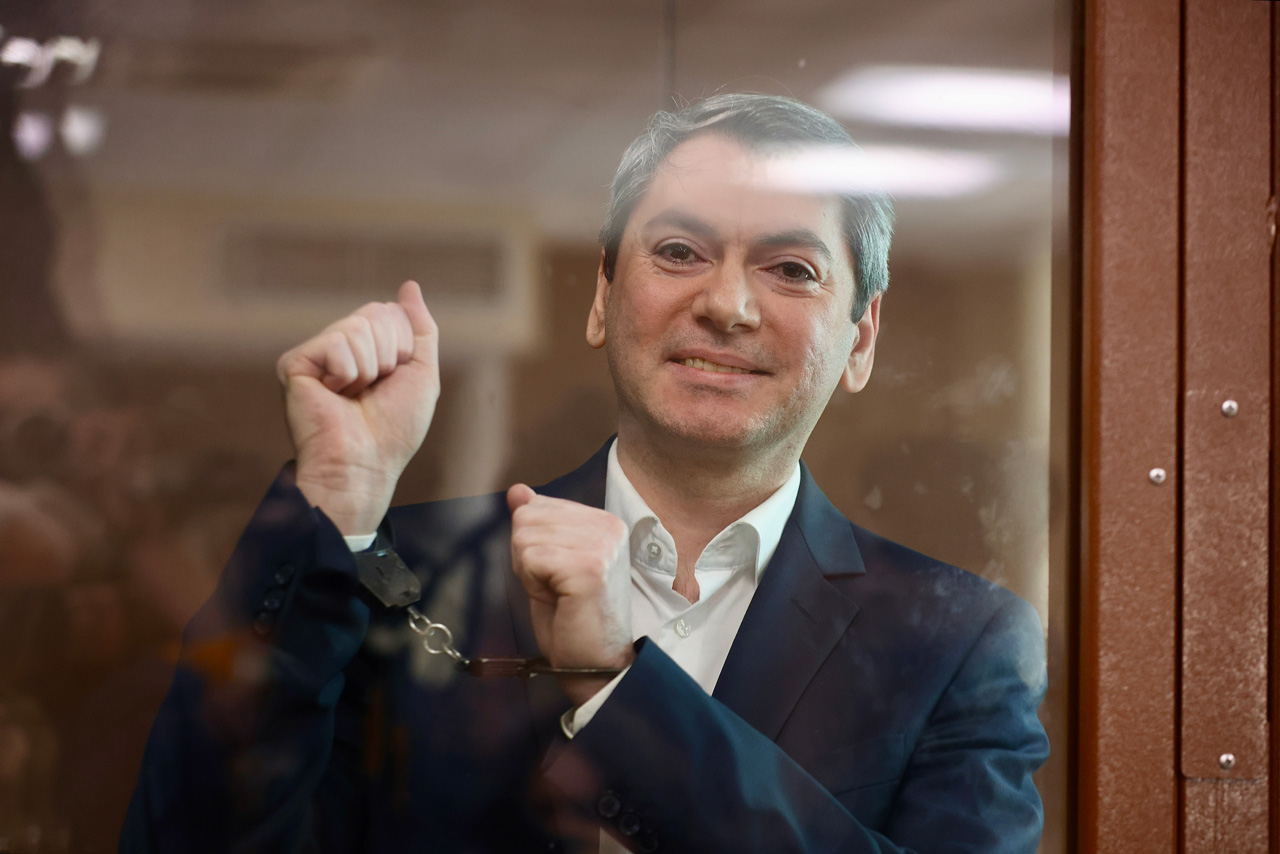
On 8 July Golos announced that they would cease all operations — after Melkonyants was sentenced to five years in jail for working with the so-called “undesirable” European Network for Election Monitoring Organisation. |
|
|
Grigory Melkonyants in court before the announcement of the verdict, 14 May 2025 / Photo: Evgeny Kurakin for OVD-Info |
|
|
Note the sentence. What seems to have always bothered the Kremlin vis-à-vis Golos was their work with foreign powers. NTV’s hit piece, “A Voice from Nowhere” is replete with accusations of working with foreigners, and especially, taking money from various pro-democracy institutions. These accusations were, of course, made on the Kremlin’s dime. Even the logistics for NTV’s reporters seem to have been pre-arranged with the security services, as they knew so much of Golos’s movements, the activists presumed that their phones were tapped.
|
But, indeed, there once was a time when western institutions could fund Russian pro-democracy initiatives. The Kremlin feared that, which is why so much repressive legislation and targeted jailings sprung up specifically to destroy sources of funding. I am certain that the Kremlin was overjoyed when the US programmes of support for Russian pro-democracy groups collapsed — making it even easier to silence pro-democratic voices.
|
|
|
Please answer our questionnaire so we can better understand our audience! |
|
|
Sources cited in the reading list are not necessarily aligned or in a formal partnership with us. It is just what the editor finds interesting. |
|
|
The Digest is created by OVD-Info, written by Dan Storyev, edited by Dr Lauren McCarthy |
OVD-Info English newsletter privacy policy: how we work with your data |
|
|
|