EXPLAINING THE STRUGGLE FOR HUMAN RIGHTS IN RUSSIA |
|
|
Hello and welcome back to the Digest. I am back from my break and am happy to see you — and I am also especially happy to say hi to those of you I met in Chisinau and Odesa. Today I am going to cover the simmering tension in Bashkortostan, a Russian region long-battered by the Kremlin’s repression.
|
In solidarity, Dan Storyev |
|
|
Donate to OVD-Info to keep us running |
|
|
Trigger warning:
This is a newsletter about Russian repressions. Sometimes it will be hard to read. |
|
|
Long-time readers of the Digest will remember Bashkortostan. It is a Russian region named after its native Turkic Bashkir people, located near the border with Kazakhstan. It has also been a hotspot of grassroots protest before and during the full-scale war in Ukraine. The protests in Bashkortostan are interesting to me, as the fight is at the nexus of environmental justice, indigenous rights, anti-war and anti-authoritarian sentiments. Similarly, the repression the locals face is manifold — the familiar Kremlin footprint, but also hyper-capitalist development and corrupt local officials.
|
|
|
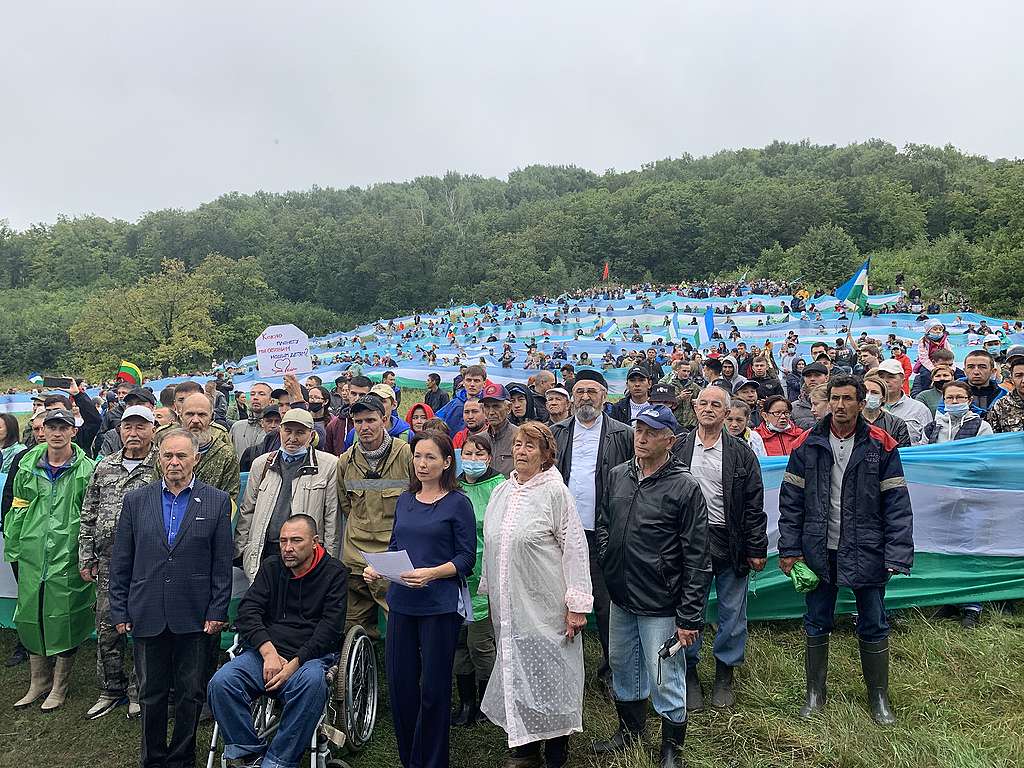
Peaceful protest on the Kushtau hill against the mining plans of the Bashkir Soda Company, August 2020 / Photo: Ivan Zhilin, Novaya Gazeta |
|
|
Bashkortostan first came into the global headlines during the 2020 Kushtau protests. You can read more about them in Digest #40, but the gist of it is that local activists stood up against a predatory development project threatening to eradicate the sacred Kushtau mountain. Joined by activists from all over Russia they won.
|
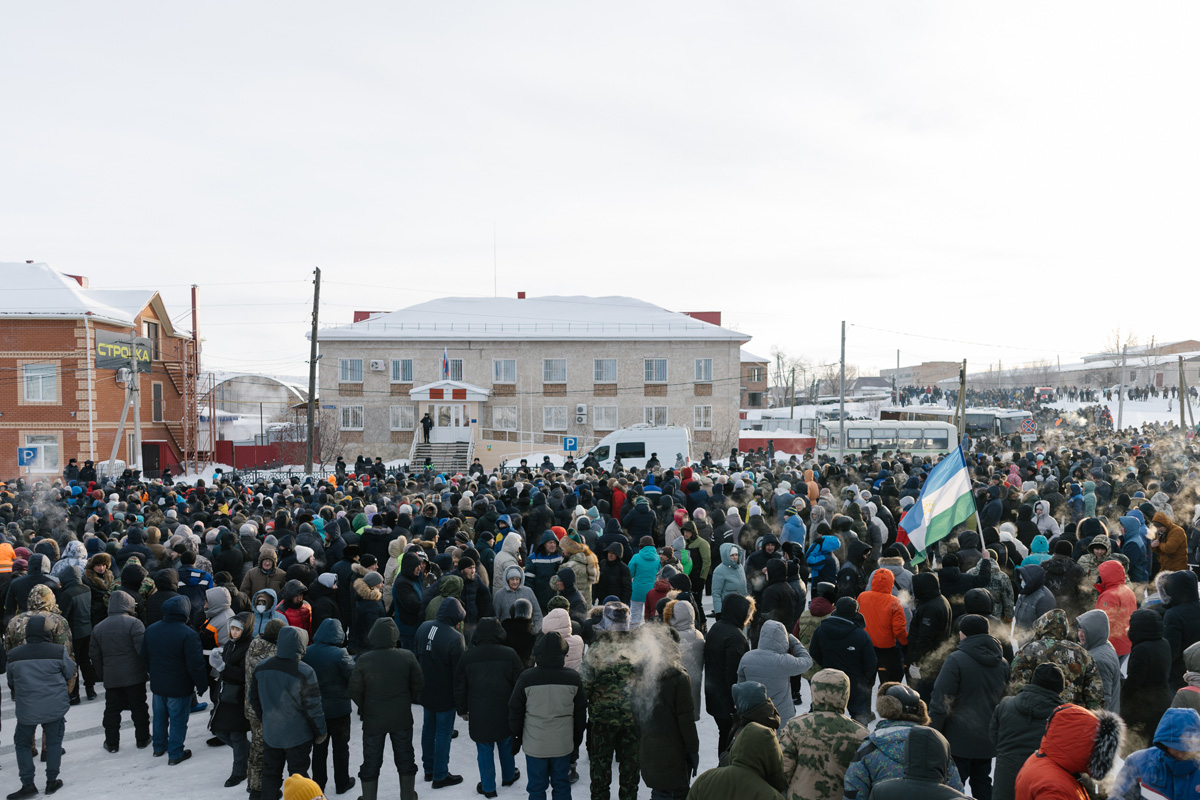
In 2024, Bashkortostan became a hotspot of protest once again. The jailing of indigenous rights activist Fayil Alsynov led to one of the largest protests in wartime Russia, as thousands of people demanded his release. We covered these protests extensively, as well as their aftermath, even putting reporters on the ground. We also provided legal aid to protesters and reported human rights violations to international bodies. Some Kushtau veterans took part in the protests which coalesced around the town of Baymak.
|
| |
Protestors in front of the Baymak district court where Fail Alsynov was on trial, 17 January 2024 / Photo: OVD-Info |
|
|
Now, fear reigns in Bashkortostan, as the authorities are keen to punish protesters in a region-wide crackdown that has already claimed two lives. Rifat Dautov died in police custody under murky circumstances. Miniyar Bayguskarov committed suicide after facing pressure from authorities over his participation in protests. However, against all odds, there is now a new protest movement — aimed at saving the Kyrkty-tau Ridge. |
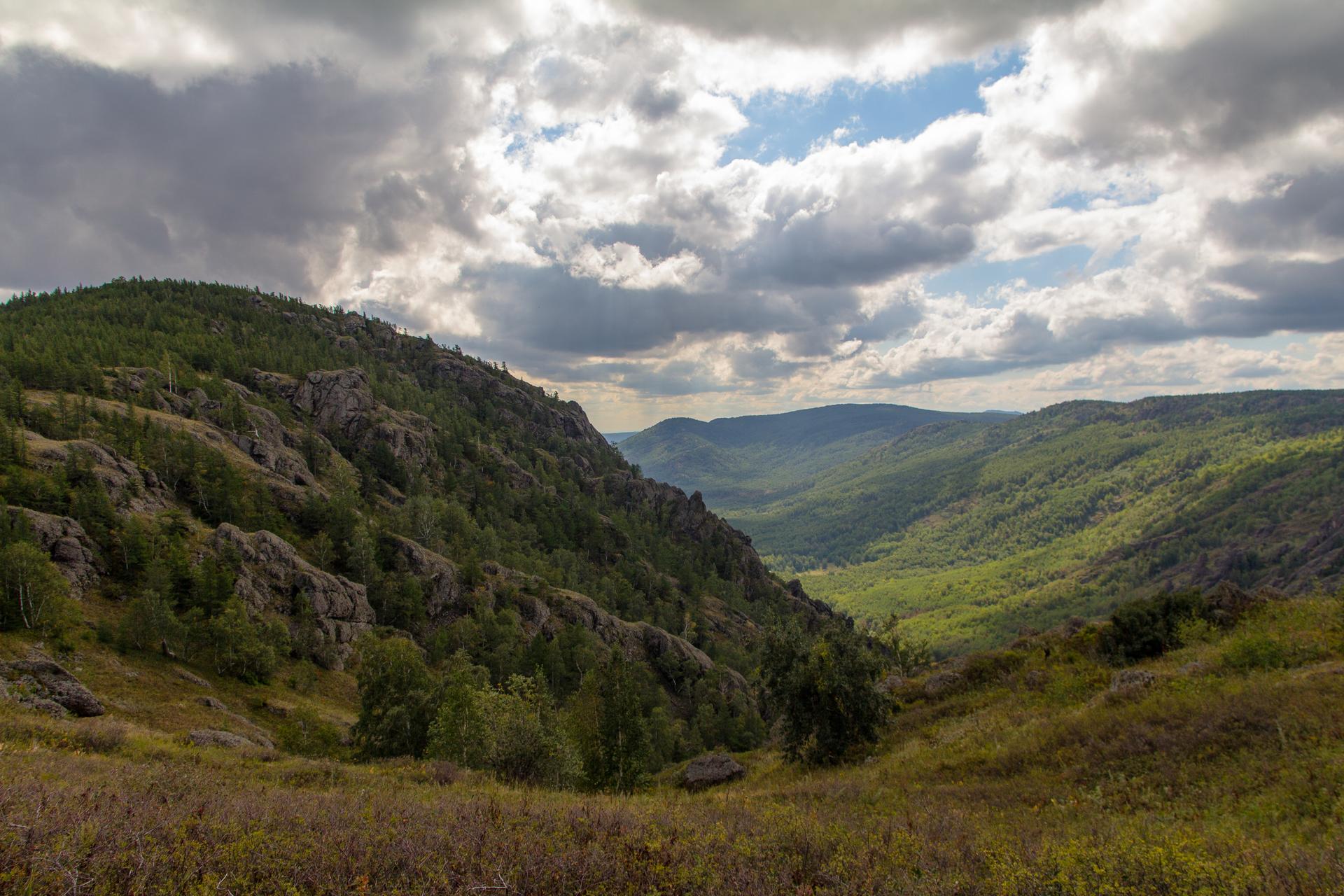
The protests against predatory copper mining in the Kyrkty-tau Ridge began around the same time as the Kushtau protests. The ridge is a forested mountain range in the eastern part of Bashkortostan. For locals it is sacred — it is a place of traditional rituals and yiyins, a form of indigenous direct democratic assemblies.
|
In 2015, the Russian Copper Company (RMK) became interested in the Salavat copper deposit at the foot of the ridge, and in 2019 received a license for development.
|
|
|
Kyrkty-tau mountain range / Photo: Андрей Шуняев, Wikimedia Commons, CC BY-SA 4.0 |
|
|
“When people learned about this, they became worried and organized public gatherings, as is usually the case here,” says Razif Abdullin, former editor-in-chief of the Bashkortostan publication Aspects. “The mining halted in 2020, when there were mass protests against the plans of the Bashkir Soda Company to develop Kushtau. Then the protests received a wide response, Vladimir Putin intervened and even seemed to take the side of the people — he gave instructions not to develop this mountain.”
|
|
|
Watch my testimony at the US Committee on International Religious Freedom where I expand on OVD-Info’s work and Russian civil society’s role. | |
|
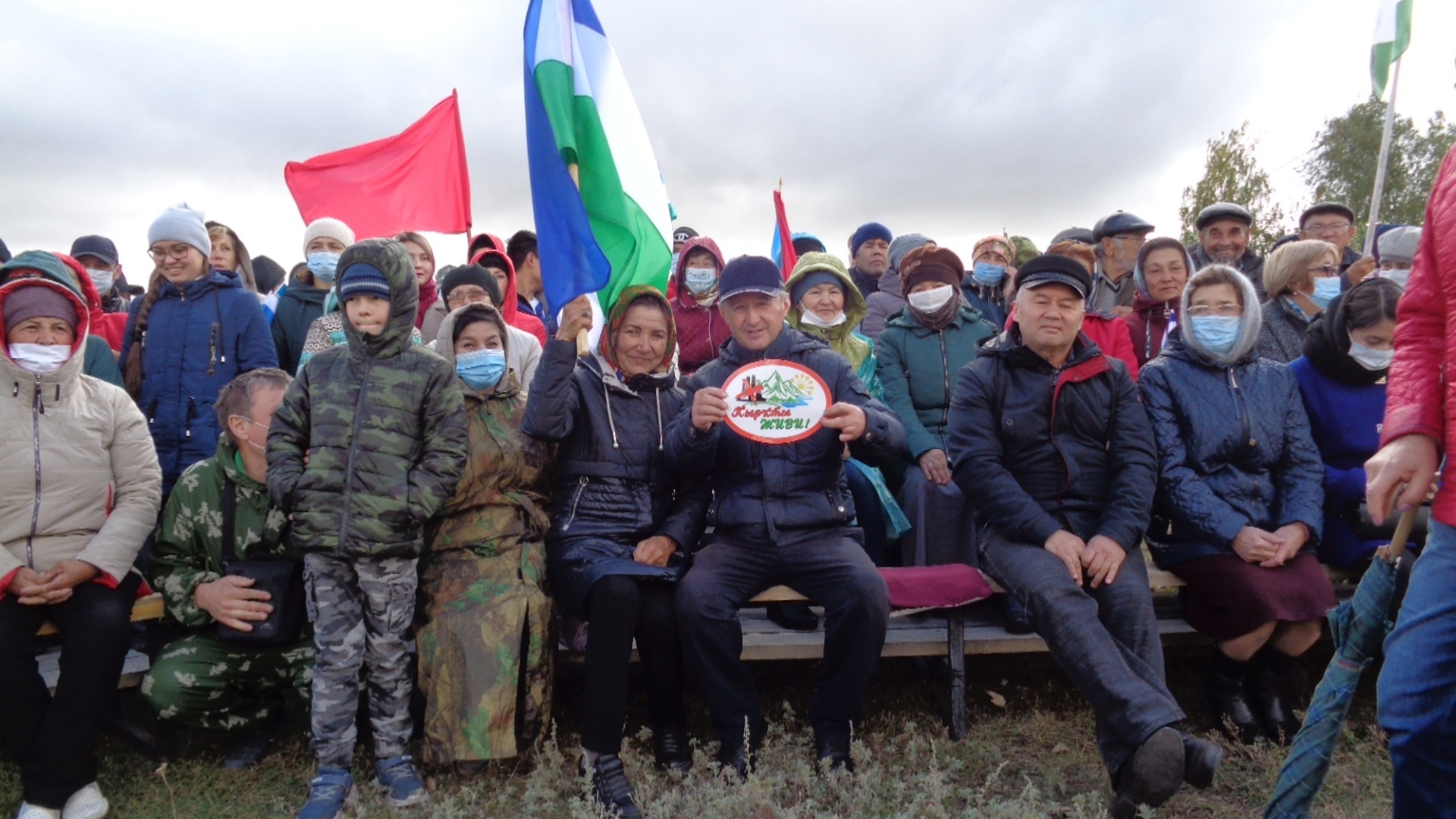
In August and September 2020, two public gatherings in defense of Kyrkty-tau took place in the village of Askarovo, Abzelilovsky District, with nearly 2,000 people participating from all over Bashkortostan. The protests were largely peaceful, without many excesses from the authorities. Riding the success of Kushtau, the defenders of Kyrkty-tau seemed to have won. But this year, the Russian Copper Company is back and it wants to mine.
|
|
|
Public gathering in the village of Askarovo, September 20, 2020 / Photo: “Ташбулат в объективе” VKontakte page |
|
|
Not only Bashkortostanis, but also residents of Magnitogorsk in the neighboring region of Chelyabinsk, are outraged by the mining as they fear rapid environmental degradation impacting their living and vacation areas. Just like many neighbouring locales, Magnitogorsk is itself a site of environmental mismanagement that has been disastrous for the local population. The Soviet-era prison labour-built steel plant is constructed in such a way that it thoroughly suffocates the city with smoke — I recall how during my own visit there the air felt heavy wherever I went.
|
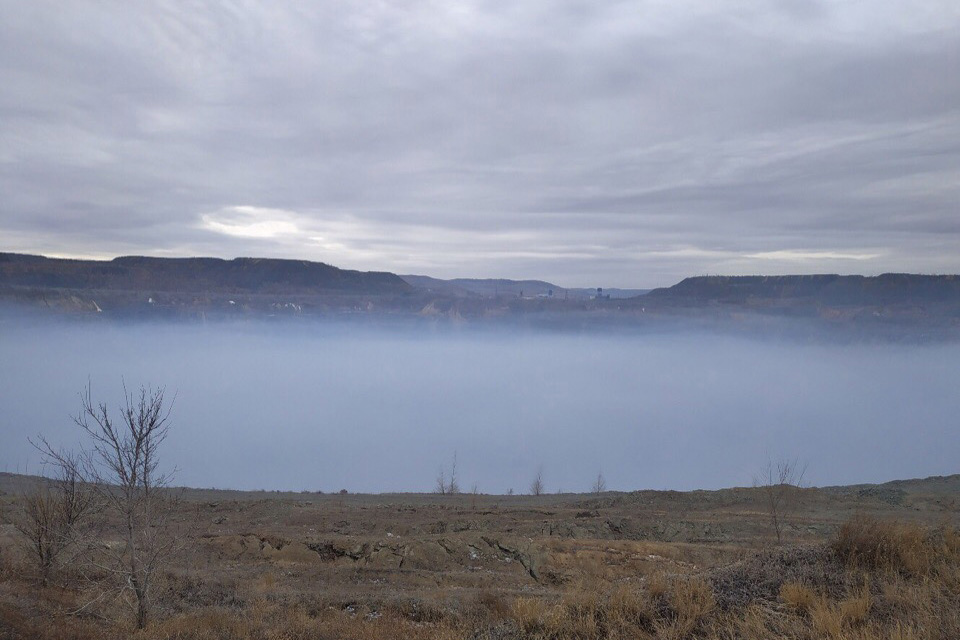
Most of all, the locals fear a repeat of the Sibay ecological disaster when heavy sulfur dioxide rose from a quarry with smoldering remains of copper ore, and the city of Sibay was covered in thick smog which suffocated the residents for months.
|
|
|
Sulfur dioxide rising from the quarry in Sibay, November 2018 / Photo: “Сибай, дыши!” VKontakte page |
|
|
On 22 May, the nearby village of Askarovo held a yiyin — the aforementioned grassroots assembly — to discuss the mining situation. The same day the village was flooded with riot police. There were no arrests and no protests that day: the authorities only wanted to show force. |
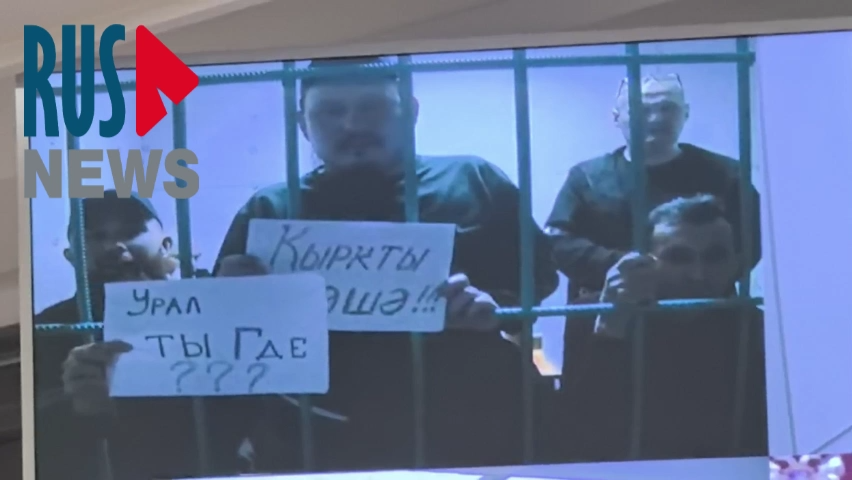
On 3 June, even the detained protesters from the Baymak case managed to stage a protest during their court hearing.
|
|
|
Baymak case defendants protesting in defense of Kyrkty-tau via video link during a Supreme Court hearing on June 3, 2025 / Screenshot: RusNews |
|
|
On 5 June, several Kyrkty-tau defenders were detained. The authorities launched a criminal case against one of them, activist Ural Baybulatov, accusing him of “spreading misinformation” over his social media post explaining the threat to Kyrkty-tau’s ecology. |
This ongoing story really has everything — the almost colonial overreach of the coalition of state and capital, popular discontent, the clash of corrupt officials with local democratic practices. It also shows the amazing resilience of the Bashkir people, who continue to resist and participate in civil society, despite the ongoing crackdowns. In the meantime, the heritage of environmental disasters is omnipresent. As local activist Buranbay Askarov told us: “The Urals have been raped and mined for 300 years. Go see the southeast of Bashkortostan, Sibay and Magnitogorsk. Our region is already on the brink of disaster.”
|
This is a partial rewrite of a longer Russian-language article by our reporter Marina-Maya Govzman. |
|
|
Please answer our questionnaire so we can better understand our audience! |
|
|
Sources cited in the reading list are not necessarily aligned or in a formal partnership with us. It is just what the editor finds interesting. |
|
|
The Digest is created by OVD-Info, written by Dan Storyev, edited by Dr Lauren McCarthy |
OVD-Info English newsletter privacy policy: how we work with your data |
|
|
|